Blog Feed

Landyn’s First Blog Post

Hi!

My name is Landyn Gray. I am a 2nd year at UNC at Chapel Hill. I am a pre-nursing major with a tentative minor in anthropology. I created this blog to discuss different topics related to Medical Microbiology. Throughout the next 10 weeks, I will discuss topics and news related to Microbiology and current events in the field.

Enjoy!

Reminder… HIV Epidemic is Still a Thing

You can't Have HIV If you Don't get tested - Roll Save Advice ...
FALSE!

As I’ve reminded you all before, the world has NOT stopped since COVID-19 reared its ugly head. Yes, I know, a global pandemic is absolutely scary, but let’s take a look at something a little more focused at home. It’s been a long long while that this disease has been around and despite our most valiant efforts, it’s still not going away. If the title hasn’t given it away already, yes, it is HIV. This endemic still plays such a large role in our nation and it is our job to take action to help reduce the risk as much as possible.

The first step in stopping HIV is prevention. Using preventative methods, scientists are hoping to reduce the risk of HIV by 75% by 2025. There are developed tests and preventative medications that are widely available, yet are rarely used. Tests such as Preexposure prophylaxis (PrEP) and Treatment as Prevention (TasP) can significantly reduce the risk of contracting HIV. Of course, practicing safe sex habits is number one, you know, monogamy, condoms, abstinence, etc., but those more at risk should look into these preventative methods. Not only would you be benefitting yourself, but also all those who you may put at risk as well.

If, in the unfortunate case, you do contract HIV, there is no cure, but there are medications that greatly restrict the disease from progressing into AIDS. Antiretroviral Therapy (ART) is a treatment that targets RNA in virally infected cells to prevent the disease from replicating. HIV targets CD4, which is a site on helper T cells in the immune system. By taking ART, despite the low levels of CD4, your body can still resist further degradation, as well as reducing the risk of transmission. Scientists have developed increasingly powerful and more convenient medications to treat HIV. Originally, people were required to take multiple regimens of up to 20 per day! Now, there is a once daily tablet that acts as an ART to make life more manageable, both health wise and convenience wise.

Monoclonal Antibodies Explained Through Humira

Humira (Adalimumab) is one of many monoclonal antibody treatments that have been developed for treating specific diseases. Monoclonal antibodies are targeted by taking a specific B cell (part of the immune system) and isolating it so the receptors of only that particular cell that code for what the disease is are activated. Breaking down monoclonal antibodies even more, scientists isolate that particular B cell that codes for the antigen they want to focus on, then combine it with an inactive malignant (cancer) cell. These two cells bind when an enzyme is present, creating new cells that clonally expand and code for the specific antigen they are targeting. We’re going to discuss the drug, Humira, today in relation to monoclonal antibody medicine.

For more detailed information regarding Humira reference their website (hyperlinked above) or read about it on MedNet by clicking the hyperlink. I will condense all the information here too. Humira aids in a variety of different diseases from rheumatoid arthritis, to multiple sclerosis, to Crohn’s disease, and plaque psoriasis, among others. How this drug works is it targets and binds to TNF. TNF is a pro-inflammatory cytokine that basically is the cause of all inflammations in your body and is part of the adaptive immune response. Humira works to suppress TNF, particularly in joints, to reduce the inflammation that is a typical symptom of these diseases. Unfortunately such a wonderful drug does not come without it’s side effects, and there are A LOT.

The main concern, at least I think so, is the susceptibility to other infections. Because Humira blocks the TNF receptors, an important part in alerting the body of serious infection, patients are more at risk of developing life threatening diseases such as Tuberculosis, Sepsis, and Fungal infections. There is also an unknown link to cancer and is not proven safe for pregnant women. But wait… there’s more! There is also an increased risk of getting Hepatitis B, anaphylaxis, or aplastic anemia. Given that you successfully avoid all of these horrible, horrible diseases, the symptoms of Humira are relatively mild. They include:

  • rash
  • nausea and stomach pain
  • headache

So… not too bad right? Like any medicine, it is important to talk to your doctor and make sure that you may benefit from this medicine. Obviously, it is not for everyone and the risks are something that should be taken into account.
…The World Does Go On

COVID-19 is killing us all one way or another. Whether it is killing us literally (not to be insensitive), killing our happiness, killing our motivation, killing our morale, I believe we can all come to a consensus that it is miserable. It seems as if everything is put on pause (except homework- *sigh*), and nothing matters other than what is going on in terms of this virus. Things that seemed so pressing before (and honestly are still quite pressing) are no longer discussed- things such as crime, the political race, weather, or anything else for that matter. Well friends, I am here to break it to you… life and problems and crime and weather and all that fun stuff is STILL GOING ON. The world has not stopped because of a virus. One thing that has definitely not stopped is disease. Just because one virus has taken over the news doesn’t mean it’s the only virus that can take over our bodies. Today, after a post I’ve already made about COVID-19, I thought I would distract your mind with another horrible disease that can possibly kill you :).

Hepatitis B is a virus that primarily impacts the liver. It is one of those great diseases that, despite our most valiant efforts, we just cannot stop. We have developed treatment and we have developed vaccines, but the virus has not stopped. We are further developing treatments, as we mature scientifically, in hopes that one day this disease can be controlled. As of right now, there is a medication that targets IFN-alpha, a target that I have discussed in earlier posts. However, this is proven to be only 20% effective. Because the disease continues to progress and mutate, it is something that is still concerning, despite its lack of focus in news articles.

Hepatitis B has infected millions of people worldwide. It is a virus of serious concern, as although we have developed those vaccines and medications that barely work, case rates have wavered slightly from year to year. The CDC has provided an excellent graph and explanation as to the concern around Hepatitis B. The goal for 2020 is to keep the mortality rate below 0.48 per 100,000, continuing the slowly downward trend in the past decade. The past two years have been well below this rate and it is the intention to continue doing so. To do your part in helping this be a success, get tested if you have suspicion and ensure that you are treated correctly. Like any other disease, taking necessary action will ensure that we continue to lower the prevalence and intensity of these diseases.

Responses to COVID-19

No, this is not how people are reacting emotionally. We are here today to talk about what our body is ACTUALLY doing to fight this thing and how we are using that genetic information to combat the virus. This week it’s going to get pretty confusing in terms of microbiology language so let’s see how good I do at breaking it down. First, I am going to discuss how we can test for COVID-19 using the virus’s genetics. This is where we see what is going on inside the virus. Then, we will talk about a treatment that is being used by tampering with our immune system (in a good way).

Math Lady / Confused Lady | Know Your Meme

Okay first thing first- genetics. I’m sure you all know that the mitochondria is the powerhouse of the cell. I mean c’mon, if you were to ask someone who hasn’t taken a science class since freshman year of high school, they could even tell you that. That doesn’t have much correlation to what I’m talking about, but basically the other organelle that people know about is the nucleus. The nucleus has all the genetic information for that cell in it. We, as humans, are composed of DNA, we take DNA, break it down into a single strand- RNA- and then build new DNA based off of that. Some viruses work differently in that instead of breaking down DNA to build more DNA, all they have in them is RNA- DNA is never made. This is the case with COVID-19. Because the genes of the coronavirus are only composed of RNA, we can easily differentiate them from our “self” cells that are made up of DNA. One way that we test to see if someone is positive for the coronavirus is to see if they have these RNA cells inside them. This report (available for free download), discusses that using this method of diagnosis is effective because it allows us to detect the virus accurately and sensitively in terms of different variants. I find this method incredible because we can take something so ridiculously small that we barely know is there and use it on such a large scale. One drawback, though, is that it can’t be used with low viral titer, which I’ll explain now.

Our immune system is composed of a lot of different types of cells. The main cells that compose what we call our adaptive immune system are B cells and T cells. We are going to focus on B cells right now. When we are exposed to an antigen or a pathogen or anything bad in our body, we begin to make B cells (and T cells) that code specifically for that pathogen. We then make clones out of these B cells that have become activated to fight the virus. Whenever the B cell is first activated it makes a type of antibody called IgM. IgM is helpful but it doesn’t do the job as well as it could possibly be done. As the B cell begins to divide, it gets signals that tell the B cell to start producing IgG, a better antibody. Whenever we have a lot of IgG (or a high titer), it means that you are exposed to the pathogen and the body is actively fighting it off. These active B cells that are producing IgG are called plasma cells. In this study, scientists are taking Convalescent Plasma and injecting it into the infected person to give them more active fighting antibodies that target COVID-19, and thus causing the disease to start disappearing. Out of all the trillions of cells that are in our body, it is amazing how finding and targeting one minute and specific cell can have such a drastic change on our body.

ANOTHER COVID-19 Update

Coronavirus Memes Are Spreading Like, Well, Coronavirus (100 Memes)

Hello again! This week we’re going to look on the more optimistic side of this horrible outbreak that is basically going to cause an apocalypse (minus the zombies (maybe??)) if it isn’t under control soon– at least the media is telling us all that. Anywho, we’re going to see how on top of things scientists are with dealing with this virus. They have already begun working on a way to treat the Corona Virus. Of course it’s all still in the works, but maybe that apocalypse won’t have to happen after all. There are several different methods that scientists are using to approach COVID-19, and they could be promising.

One of the first types of treatment that we will discuss is IFNα. I picked this one as what to talk about first because it is what we are currently discussing in class and so I can better explain it than some of the others. An interferon (IFN) is a type of Cytokine, which is one of the types of immune cells that we have in our body. IFNα is an antiviral that helps regulate the immune system. This is a broad-spectrum type treatment and has been successful in treating SARS, which is a different disease caused by a coronavirus. This treatment, to me, seems like a valid option because it is simply inhaled a few times a day, for generally less than 10 days. That can be a fast rate of treatment. Of course, since it is broad-spectrum there is a likelihood that the virus won’t respond due to resistance or variations.

Another type of treatment can be PEP (pre/post exposure prophylaxis). This treatment is different mainly because it can be used prior to exposure to the pathogen, which could be a considerable prevention method. This is another broad-spectrum method that has been used to treat other viruses, so again, it may not always be effective against this virus. I think it’s pretty cool how this one works, though. The drug works to prevent the virus from leaving an infected individual in respiratory droplets. Now, we know that this is not necessarily the only way that they virus spreads, but if we were to combine this treatment and do multi drug therapy with other antiviral medications, we could have a real breakthrough in treatment and preventative measures. I hope this information might make you feel a little better, knowing that treatment is coming and this horrible disease may become slightly less horrible.

Personalized Medicine- The Future of Treatments??

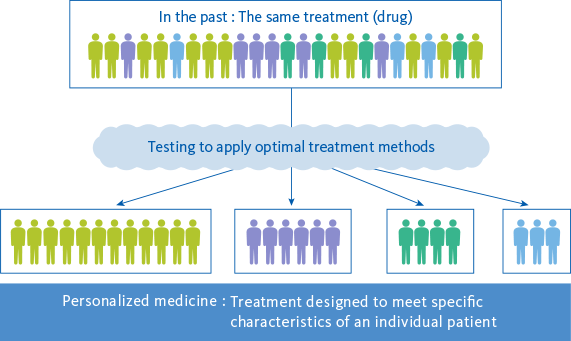
Hi friends! We’re back today to talk about something a little more complicated than usual, but something that can be very exciting if it advances as hoped. Our immune systems are an amazing thing that are unique to each individual. Based on our experiences throughout life, our immune system has coded and developed into an army that is prepared to attack any invaders that you may come across. If you run into the same disease a second time, you might not even realize you have it! That’s how awesome our immune system can be. Scientists are now targeting our immature cells that haven’t been specified in our immune systems in order to fight some pretty serious conditions.

The treatment is called personalized medicine and the process is slightly complex so I’ll try and break it down. Your body has Dendritic cells (DC) and T cells that are made but they’re just in your body waiting for a pathogen to come so it can specialize to attack that pathogen. These are called naive cells. Doctors are targeting these cells and making them differentiate to target exactly what needs to be attacked. I found this topic to be particularly exciting because it is a way scientists are using to treat cancer, something we thought was incurable only a few years ago. A certain article I found about using DC therapy to treat Mesothelioma as a vaccine. This vaccine used specialized dendritic cells to activate T cells that in turn would attack the Mesothelioma.

What’s even better about this treatment is that the cost is low! Now, I wouldn’t say significantly lower but it would be lower and less intense than constant Chemo treatment. It’s not necessarily miraculous, though, and there are some risks to be wary of. The treatment obviously impacts your immune system in an intense way. This won’t always be helpful and can actually harm you pretty bad if it doesn’t go as planned. Cytokine Toxicity Syndrome and neurotoxicity are also risks to be aware of. The development of this treatment is truly groundbreaking and as medicine evolves we may enter a whole new realm of treatment.

World TB Day… A few days late

Google: Tuberculosis : memes

March 24th was deemed World Tuberculosis day. Now, I’m not entirely sure why they would dedicate a whole day to a deathly disease, but hey, who am I to judge. Before microbiology class, the only reason I know what Tuberculosis is was because I learned about it in my 11th grade English class because Edgar Allan Poe’s family were victims of the disease. This led to his pain that many attribute to his success. So this horrible disease in which you basically cough up blood until you die is still a real problem, hence the day of dedication. Let’s talk about what’s going on in the world today and how we’re tackling it.

So, how do we deal with this problem? Our good ole friends at the CDC explain how vaccination, prevention, and treatment work. In the US, the vaccination is given out to everyone, and in fact is not very common. Countries where TB is a lot more present do, however, vaccinate many of their children. In the US, children who are exposed to those that have TB and have no other option but to be around the disease are vaccinated, as well as health care workers who work in areas where the disease is prominent. Since most of us are likely not vaccinated, there are preventative measures to take. Many people have a latent form of TB in which they will never be affected; however, those who are must be tested and put on antibiotics to prevent the disease from becoming active. As I mentioned before, other countries have a lot higher prevalence rate of the disease, and those that are traveling abroad, and this may go unsaid, but if there is a person known to be infected PLEASE avoid them. For those that do face the unfortunate circumstance in which they are effective, antibiotics are developed that can treat the disease but must be taken METICULOUSLY for up to 9 months. So, you know, if you can, just don’t get it.

You’ve heard me discuss antibiotic resistance before. Because TB has been around for so long, its development of antibiotic resistance is quite prevalent. A more serious problem that is emerging though, is multi-drug resistant TB. That means even the combined treatment of several drugs is starting to be less and less effective. A commentary from The Lancet discusses a possible response to this problem. The choice to preventatively combat the disease as a preventative method is being suggested. If the therapy doesn’t work, therapeutic drug monitoring may allow for more effective treatment by determining the ideal doses to further prevent developing resistance. Science is making great strides in the development of treating such combative diseases and by following the recommendations of health professionals, we may continue to improve our methods of treatment.

Update on Life: How COVID-19 is Affecting ME

Coronavirus moment of levity, part II: Homeschooling memes and ...

Hey Everybody! I know this blog is meant for discussing microbiology and all that good/scary stuff but today I wanted to discuss what’s going on in my life. I moved out of my apartment at UNC a couple weeks ago and have moved back in with my parents, what a delight. Working from home has been somewhat relaxing and not having to speed walk in this heat to make it to Genome with 15 minutes to spare is something I can’t complain about (iykyk).

I had a mental breakdown at the beginning of this week because, being as destructive as I am, I broke my computer while I was half asleep. I began to panic when my computer screen was filled with bright lines that blocked out any possible communication with my 9:05 Zoom lecture in Spanish the next morning. Luckily, my teacher was very understanding of why I didn’t participate in a class based off participation. I frantically began to call local computer repair shops around my hometown, each telling me it would likely be well over a week before it got fixed and would cost upwards of $600. While I was mentally preparing myself to scrounge up $600 that I didn’t have, Apple luckily told me the damage was covered by my limited warranty, even though the damage was obviously my fault. I shipped it and got in back in ONE DAY, completely fixed, completely free. It was an absolute lifesaver and the reason that I am able to talk to you today.

As of Monday at 5 pm, the lovely state of North Carolina has declared a shut in, meaning we can’t go anywhere or do anything for the next 30 DAYS. I think I am going to go absolutely insane. It is not possible for me to sit in my house for that long without interacting with people. I can scroll through 4 different social media apps for all of 2 hours before I’m completely bored and throw my phone across the room. I have coloring books on deck and I’ll probably search through the cabinets for some board games, but my brother’s obsession with xbox will likely prevent that from happening. At least I’ll have some school work that will distract me, and I honestly never thought I would be relieved about work. Is it bad that I’m considering getting a job at a grocery store for the sole purpose of being able to leave the house? I’m not sure, but I hope your quarantine is going a lot better than mine.

STDs and AMCs

I’m sure you all know what an STD is and the several different kinds that can be contracted. It can be a scary thought that one choice can lead to a life changing event. There are several methods to prevent contracted STDs, hence the preventative term AMCs. AMC stands for Abstinence, Monogamy, and Condoms. By utilizing these methods, the risk of contracting STDs decreases significantly. This week we are going to be discussing gonorrhea. We’re going to talk about how it’s transmitted and the latest updates on antibiotic resistance.

Gonorrhea is obviously an STD, so it is transmitted sexually. Gonorrhea is found in reproductive fluids and coming into contact with these infected fluids allows for the contraction of the disease. It can come from oral, vaginal, or anal sex, thus infecting the mouth or excretory cavities. It also has the potential to infect one’s eye, however this rarely occurs because reproductive fluids must come into contact with the eye. Direct contact is not required and coming into contact with these fluids on objects such as sex toys allow for the contraction of the disease. I would suggest not using another person’s sex toys either way, but if for no other reason, don’t risk the chance of gonorrhea. And you can get it again!!! You are never safe when coming into contact with someone who has gonorrhea unless you use protection such as condoms or dental dams.

If you think getting gonorrhea isn’t the end of the world and you’ll just get it treated and everything will go back to normal, think again. Gonorrhea is an ever increasing disease and of course, antibiotic resistance is developing. Gonorrhea is becoming less and less susceptible to antibiotic treatment. When antibiotics were developed for gonorrhea in 1993, there were 3 different drugs to treat the disease. One of these was a fluoroquinolone, and the other two were cephalosporins. within the next decade or so, the fluoroquinolone was resistant to the point where it was no longer suggested for use. Gonorrhea’s susceptibility to cephalosporins is also beginning to decrease, and treatment methods have to be updated regularly to prevent treatment from disappearing. My two cents on the subject is A, M, and C. Stay protected and make smart choices!

Superbug to the Rescue???

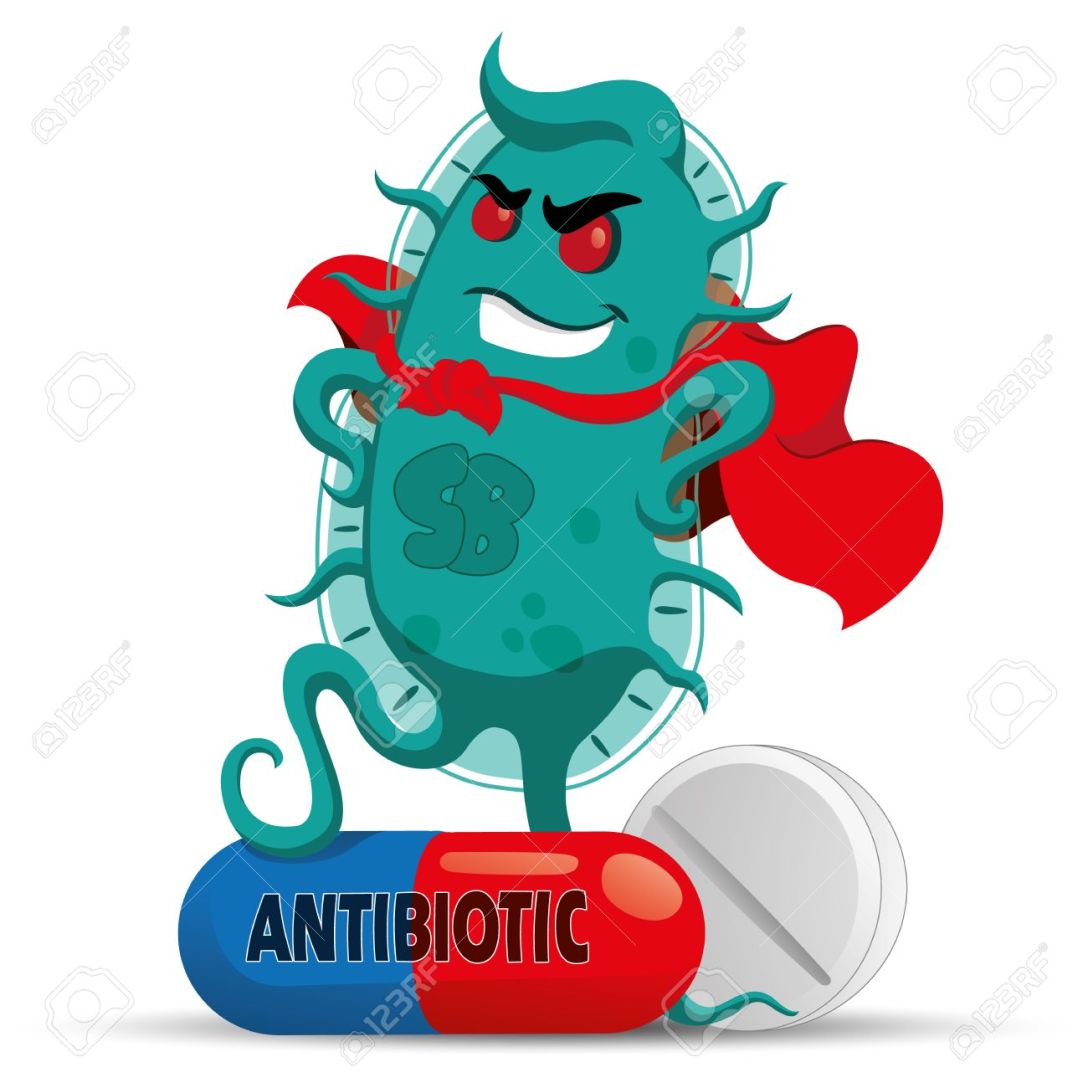
Yeah, superbugs are not coming to the rescue anytime soon… or ever. The only super these bugs are are super big problems. Last week we talked about vaccines and how we can prepare our bodies to fight off some gnarly infections. This week we’re going to discuss what happens when absolutely nothing works and it’s all because of these horrible horrible superbugs. Basically, a superbug is a microorganism that has evolved and developed so that it is resistant to antibiotics- basically making it to where we can’t get better by taking medicine. This is where survival of the fittest really comes into play (no, not us humans, the bacteria). Superbugs happen when we take antibiotics incorrectly, whether that be to treat an infection that the antibiotics cannot treat, taken too much, not finishing a prescription, or not taking the medicine when they tell you to. These are all common mistakes that I’m sure we’ve all made, but let’s discuss why its so bad that this happens and where our future is headed.

Like I was saying before, we can make a lot of mistakes with prescribed antibiotics when it comes to developing superbugs, but it might not be direct contact with the antibiotics that are creating resistance. Pediatrics Dr. Katherine Shea discuses that millions of pounds of antibiotics are used in the agricultural industry to treat animals set for consumption. The meat that we are consuming is exposing our bodies to antibiotics we don’t even realize we’re taking and allow our cells to develop resistance to some seriously harmful diseases. With kids and their developing immune systems, that’s even more likely risk for contracting diseases like Salmonella. With all the shady scandals of the agriculture industry and can be hard to discern if even the products labeled ‘antibiotic free’ are real. We discussed in class that animals can be considered ‘antibiotic free’ if their system is clear of antibiotics when slaughtered, so the animals are actually consuming antibiotics up until about 2 weeks before chopping time. Switching to vegetarianism is one approach that I could suggest, but otherwise I would be aware of where that meat is coming from next time you go to the grocery store.

If you’re wondering what kind of diseases to look out for, our good old friends at the CDC keep an updated list on what to watch out for. The list contains topics that show what is a current issue and what they are expecting in the future. These impending dooms are recorded all around the world. The diseases of biggest concern seem to be MRSA, Tuberculosis, and Staphylococcus aureus, among others. With the severity that these diseases are and the incidence levels rising, it could not be a worse time for bacteria to transform into superbugs that cannot be treated. My take on preventing this from happening to you is to only take antibiotics when necessary, follow the instructions carefully, and stop buying sketchy meats because the animal itself might not kill you but it could be an underlying cause of an illness related death later on.